
· by Michael Blair, Nashville's Handyman Service
A sticking door is a small job, and an easy one to fix the wrong way. The usual response is to plane the edge until it closes. Do that in July and it works, but the Forest Products Laboratory’s Wood Handbook notes that wood indoors is generally drier during the heating season, so by November the same door can hang with a gap along the edge that was shaved. When we look at a sticking door, it usually comes down to one of three things: the hinges have let it drop, the wood has taken on moisture, or the opening has moved. The door tends to show you which.
How can you tell why a door is sticking?
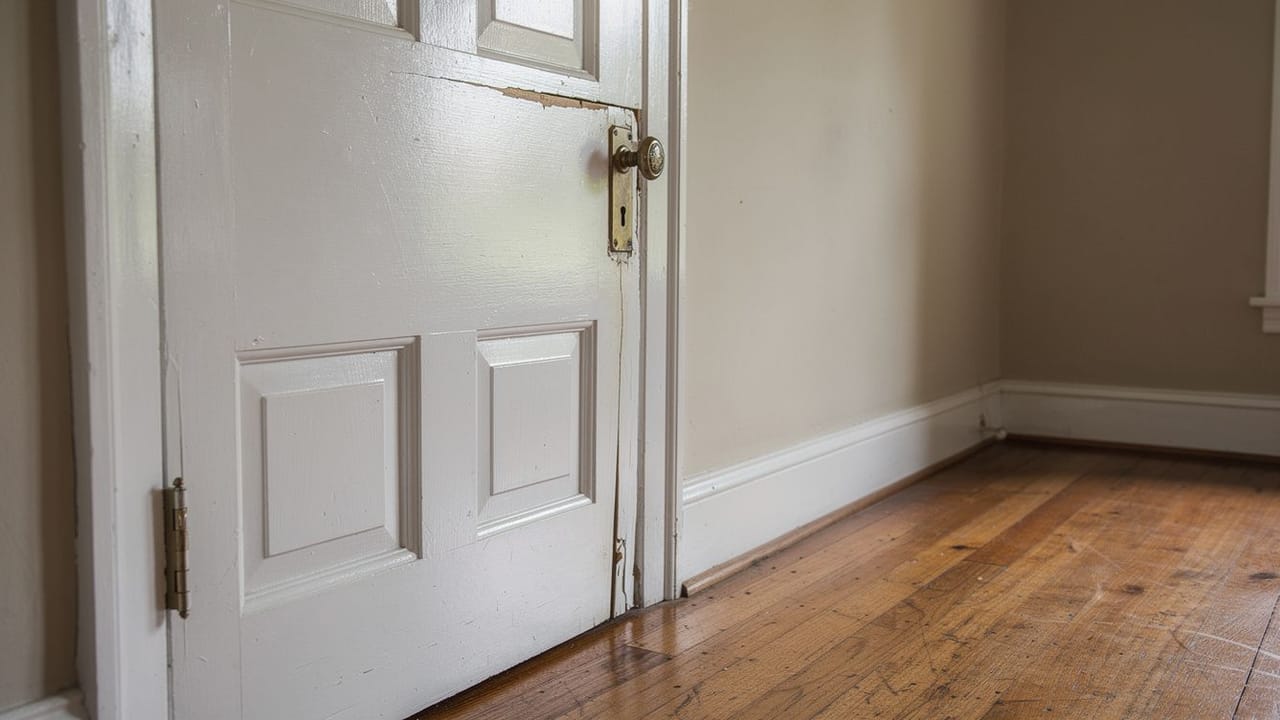
Close the door slowly and watch where it catches, or look for the shiny, worn paint on the edge and the frame. Here is how we read it. A rub at the top corner on the latch side, with a wider gap at the top of the hinge side, we take as the door sagging on its hinges. A rub along most of the latch edge points to swelling or thick layers of paint. A rub at the bottom is often a new rug, new flooring or a threshold, and the door itself is fine.
Then look at the wall around the frame. Tennessee’s Division of Geology, in its field guide to subsidence and sinkholes in East Tennessee, lists cracks in walls or ceilings, particularly around the corners of doors and windows, along with sticking doors and windows, among the signs that a foundation is moving. Fresh cracks at the corners of a frame whose door has started to catch are the clue we take most seriously, because they suggest the opening itself has shifted.
- Top corner on the latch side: sagging hinges
- Whole latch edge, worse in summer: moisture or paint buildup
- Bottom edge only: flooring, rug or threshold
- Fresh cracks at the frame corners: possibly the house moving
Why start with the hinges on a sticking door?
We start at the hinges because they are the cheapest thing to check and the quickest to put right. The loose screws we find are usually in the top hinge, often the short ones that only reach the jamb, and with them loose the door tips toward the latch. We tighten them first. If they spin, we replace one or two of the jamb-side screws in that hinge with a screw long enough to pass through the jamb and bite into the framing behind it, which draws the door back up and toward the hinge side. Door adjustments like this sit on our general repairs list alongside the other small fixes a house collects.
If the hinge mortise is chewed out and the screws have nothing left to bite, we fill the holes with glued wooden plugs or a hardwood sliver and redrill. A thin shim behind the bottom hinge leaf, or deepening the top mortise slightly, changes the angle the door hangs at without touching the door itself. A jamb that has split or pulled away from the framing is a bigger repair, and our post on small carpentry repairs to stairs, trim and jambs covers how we handle it.
Humidity and the season
Wood gains and loses moisture with the air around it, and the Wood Handbook’s chapter on moisture relations explains that below the fiber saturation point it swells as it takes on moisture and shrinks as it gives it up. A door takes that moisture in fastest at its top and bottom edges, where the end grain is. The handbook’s chapter on finishing puts liquid water entering wood 10 to 100 times faster through end grain than through the other faces, and it singles out the edges of fiberboard and other panel products as especially vulnerable for the same reason. An edge that was never painted when the door was hung has nothing slowing it down. Because indoor wood dries out once the heat is on, a door that catches through the warm months often swings free by winter.
If a door only sticks in the warm months, we seal it before we shave it. That means taking it off the hinges and priming and painting the top and bottom edges. It will not make the door immune: the handbook says plainly that paint only slows the penetration of water and does not stop it, and its moisture chapter describes coatings as retarding moisture changes without preventing them. Slowing the swing is what we are after. If a door really does need trimming, we mark the rub, take off as little as possible and prime the cut edge the same day, in line with the handbook’s advice to get primer on bare wood as soon as possible and always seal end grain. A door planed to fit its most swollen week can be left with a gap for the rest of the year.
When the frame has moved
Where a house sits on expansive clay, the ground under it swells and shrinks with the weather. The Division of Geology’s guide says wet soils of this kind can be 20 to 50% greater in volume than when dry, and that wet-dry cycles, particularly after droughts, can cause foundations to crack or buckle. It was written about East Tennessee and is no map of Middle Tennessee soils, but the warning signs it lists are the ones we watch for at a door: cracks at the corners of the opening, sloping floors, and doors and windows that start to stick. In a crawl-space house where several doors in one area begin catching at once, we look underneath at the piers before we adjust anything.
Adjusting the door or the strike plate will get it closing again, and that is fine for now. The same guide’s advice once a house is built is to keep the soil moisture around the foundation even, which includes sending downspouts and air conditioner condensate away from the house. We treat a door that needs adjusting every year, or a group of doors on one side of the house getting worse together, as a reason to have the foundation looked at by someone who does structural work, and our post on when to call a handyman and when not to covers where that line sits. We will tell you when a sticking door looks like the first sign of that rather than keep trimming it. If you have one that catches, tell us about it here.
Sources
- USDA Forest Service, Forest Products Laboratory, Wood Handbook: Wood as an Engineering Material, FPL-GTR-282 (2021) — Chapter 16: wood indoors is drier in the heating season; water enters end grain 10 to 100 times faster; panel product edges especially vulnerable; paint slows water but does not stop it; prime as soon as possible and seal all end grain
- USDA Forest Products Laboratory, Wood Handbook (2021), Chapter 4: Moisture Relations and Physical Properties of Wood — Below fiber saturation wood swells as it gains moisture and shrinks as it loses it; coatings retard but do not prevent moisture change
- Tennessee Division of Geology, Public Information Series No. 1, Subsidence and Sinkholes in East Tennessee (2001) — Cracks around door and window corners, sticking doors and sloping floors as signs of foundation movement; expansive soils 20 to 50% larger wet; wet-dry cycles crack foundations; keep soil moisture even, downspouts and condensate away
FAQ
Doors That Stick, and Why It Changes by Season — questions
Should I plane a door that sticks?
Only after ruling out loose hinges, and only as much as needed. We tighten or lengthen the top hinge screws first, since that is the cheapest fix to try. If you do plane, prime and paint the cut edge right away; paint slows moisture getting back into the bare wood, though it does not stop it entirely.
Why does my door only stick in the summer?
The wood is taking on moisture and swelling, and it takes moisture in fastest through the end grain at the top and bottom edges, especially if they were never painted. Sealing those edges slows that down and reduces the swelling. Wood indoors is generally drier once the heat is on, so a door planed to fit in summer can be left with a gap in winter.
When is a sticking door a sign of foundation trouble?
When it comes with fresh cracks in the wall around the corners of the frame, sloping floors, or several doors in one area that start sticking together and keep getting worse. Tennessee’s Division of Geology lists cracks around the corners of doors and sticking doors among the signs of foundation movement. A single door with loose hinges is not a foundation problem.
How do you fix a door that sticks at the top?
Start at the top hinge, since a rub at the top latch-side corner usually means the door has dropped. Tighten its screws, and if they spin, swap one or two jamb-side screws for ones long enough to bite the framing, which pulls the door back up. A thin shim behind the bottom hinge leaf also changes how it hangs.